
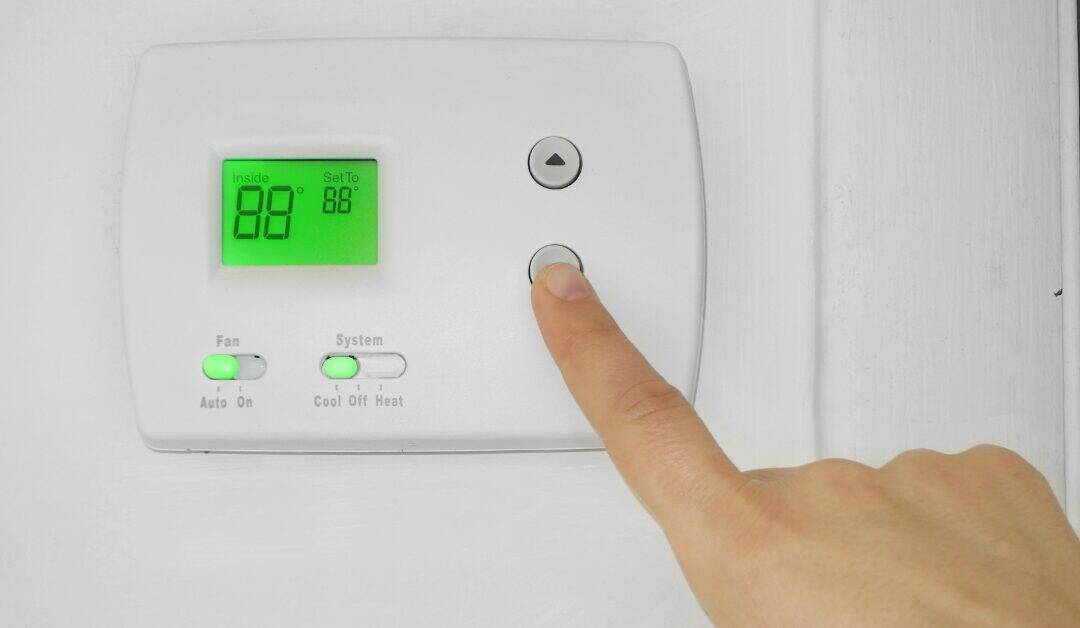
A thermostat not working is usually caused by dead batteries, a tripped breaker, incorrect settings, loose wiring, or a faulty thermostat. Many thermostat problems can be fixed with a few simple troubleshooting steps, while others require professional HVAC repair. This guide explains the most common reasons a thermostat stops working, how to troubleshoot the problem safely, and when it’s time to call an HVAC technician.
Here is what to do right now if your thermostat stops responding:
- Replace the batteries, even if the screen still shows something
- Check your electrical panel for a tripped breaker and reset it
- Make sure the thermostat is set to heat or cool and a few degrees past the room temperature
- Check the air handler or furnace switch and door, both need to be on and closed
- If the screen stays blank or the system will not turn on, call an HVAC pro
Below, our team at Advantage Air Services walks through why thermostats stop working, how to troubleshoot yours step by step, and when a repair or replacement is the smart call. We have kept homes comfortable across Raleigh, Cary, and the surrounding Wake and Johnston County communities since 1999, and a dead thermostat is one of the most common calls we get.
What a Thermostat Actually Does
Your thermostat is the brain of your heating and cooling system. It reads the temperature in your home, compares it to the setting you chose, and signals your furnace, air conditioner, or heat pump to turn on and off. When it stops working, the rest of your system has no instructions, so nothing runs even if the equipment itself is perfectly fine.
That is the good news. A blank or unresponsive thermostat does not mean your whole system has failed. Often the equipment is ready to go and only the controller needs attention. Knowing how to tell the difference saves you worry, time, and sometimes the cost of an unnecessary service call.

Common Reasons a Thermostat Stops Working
Most thermostat problems trace back to the same short list of causes. Working through them in order is the fastest way to find your issue.
Dead or Weak Batteries
Many thermostats run on batteries, and weak batteries are the number one cause of a blank or glitchy screen. Even if the display still shows numbers, low power can keep it from signaling the system. Replace the batteries first, every time, before assuming anything worse.
A Tripped Breaker or Blown Fuse
Your heating and cooling system runs on dedicated circuits. If a breaker trips or a low-voltage fuse on the control board blows, the thermostat can lose power or lose its connection to the equipment. A quick look at your electrical panel rules this in or out fast.
A Dirty Thermostat
Dust and debris build up inside older thermostats and interfere with the sensor and contacts. A thermostat that reads the wrong temperature, or behaves erratically is sometimes just dirty inside and needs a gentle cleaning.
Wiring Problems
Loose, corroded, or disconnected wires behind the thermostat break the link between the controller and your system. Wiring issues are common after a thermostat is bumped, after a DIY swap, or simply with age. This is where many homeowners decide to call a pro, since low-voltage wiring should be handled carefully.
Bad Placement
A thermostat mounted in direct sunlight, near a supply vent, above a heat-producing appliance, or on an exterior wall will read the wrong temperature. It may short-cycle your system or never reach the set point. Placement problems often masquerade as a broken thermostat.
Age and Wear
Thermostats do not last forever. Most have a service life of around ten years. An older unit that is increasingly inaccurate, slow, or unresponsive may simply be worn out and due for replacement.
Step-by-Step: How to Troubleshoot a Thermostat That Is Not Working
Before you call anyone, run through these steps in order. Many thermostat problems are solved in a few minutes.
- Step 1: Check the display. Is the screen blank, dim, or frozen? A blank screen almost always points to power, batteries first, then the breaker.
- Step 2: Replace the batteries. Use fresh batteries of the correct type. This alone fixes a large share of thermostat calls.
- Step 3: Confirm the settings. Make sure it is set to heat or cool, not off or fan-only, and that the target temperature is set several degrees past the current room temperature so the system is actually called to run.
- Step 4: Check the breaker. Find the breaker for your furnace, air handler, or air conditioner. If it is tripped, switch it fully off and back on.
- Step 5: Check the system switches and panels. Furnaces and air handlers have a power switch that looks like a light switch, and a door or panel that must be fully closed for the system to run. Confirm both.
- Step 6: Clean it gently. Remove the cover and use a soft brush or compressed air to clear dust from inside.
- Step 7: Watch how it responds. After changing a setting, you should hear the system kick on within a minute or two. If nothing happens, the problem is likely beyond the thermostat.
If you have worked through these steps and your thermostat is still not working, or your home is getting uncomfortable fast, do not keep guessing. Call (919) 639-2661, and our team will get your comfort back. Ask about our $25 off any service repair, and remember we offer flat-rate pricing with no surprises.

Specific Problems and What They Mean
The Screen Is Completely Blank
A blank screen is a power problem until proven otherwise. Replace the batteries, check the breaker, and confirm the furnace or air handler switch and door. If the screen stays dark after all of that, you likely have a wiring fault, a blown control-board fuse, or a failed thermostat, and that calls for a professional.
The Thermostat Is On, but the System Will Not Turn On
If the display works but your heat or air conditioning will not start, the thermostat may not be sending the signal, or the equipment may have its own issue. This is the classic case where our HVAC repair team checks the thermostat, the wiring, and the system together to find exactly where the chain is broken.
The Temperature Reading Is Wrong
If the thermostat says 68 but your home clearly is not, suspect placement, dust, or a failing sensor. A unit near a vent, a lamp, or direct sun will misread the room. Cleaning and relocation fix many of these; a worn sensor means replacement.
The System Short Cycles
Short cycling, when your system turns on and off rapidly, can come from a thermostat that is dirty, poorly placed, or failing, though it can also signal a deeper system problem. Because short cycling wears out equipment quickly, it is worth a professional look if cleaning and placement checks do not solve it.
Your Smart Thermostat Is Acting Up
Smart and Wi-Fi thermostats add convenience and a few new failure points: a dropped Wi-Fi connection, a drained internal battery, a needed software update, or a compatibility issue with your system, often a missing common wire, the C-wire. Restart the unit, check your Wi-Fi, and confirm it still has power. If it keeps dropping out, a pro can confirm whether your wiring supports it.
Repair or Replace: Which Makes Sense?
Once the simple fixes are ruled out, the question becomes whether to repair the thermostat or replace it. A few guidelines help.
Repair, or simply re-secure and clean, makes sense when the unit is relatively new, the wiring just needs attention, or the problem is placement. Replacement is usually the better value when the thermostat is roughly ten years or older, when it is consistently inaccurate, or when you want the energy savings and control of a modern programmable or smart model. A newer thermostat that matches your system and is wired correctly often pays for itself by running your equipment more efficiently.
The key is matching the thermostat to your system. A heat pump, a multi-stage furnace, and a basic single-stage AC all have different control needs, and the wrong thermostat, or a missing C-wire, causes the very problems people blame on a broken unit. When in doubt, our HVAC services team will recommend and install the right one.
When to Call a Professional
Some thermostat issues are genuinely DIY. Others are a sign to pick up the phone. Call a professional when the screen stays blank after new batteries and a breaker reset, when wiring looks loose, corroded, or burnt, when the system still will not respond, when the unit short cycles, or when your home is heading toward a no-heat or no-cool situation in extreme weather. For Raleigh-area homes, summer heat and winter cold snaps make a dead thermostat more than an inconvenience, and our 24/7 emergency service exists for exactly those moments.
At Advantage Air Services, every visit comes with NATE-certified technicians, flat-rate pricing you can plan around, and a promise that we do not leave until you are satisfied. We have served Wake and Johnston County families since 1999, and we treat your home like a neighbor’s, because that is who you are.
Frequently Asked Questions
Why is my thermostat screen blank?
A blank thermostat screen is almost always a power problem. Start by replacing the batteries, then check your electrical panel for a tripped breaker and confirm the furnace or air handler switch is on, and its door is closed. If the screen stays blank after all of that, you likely have a wiring fault, a blown control-board fuse, or a failed thermostat that needs a professional.
Can a thermostat just stop working?
Yes. Thermostats wear out, typically after about ten years, and can fail from dead batteries, dust inside the unit, loose wiring, or a bad internal sensor. The good news is that a failed thermostat does not mean your whole system is broken; often, the equipment is fine and only the controller needs repair or replacement.
How do I reset my thermostat?
For a battery-powered model, remove the batteries for about thirty seconds and reinstall them. For others, switch off the breaker that powers your heating and cooling system, wait a minute, and switch it back on. Smart thermostats usually have a reset option in their menu or app. If a reset does not restore normal operation, the issue is likely deeper than a glitch.
Why is my thermostat not turning on the AC or heat?
If the display works but the system will not start, the thermostat may not be sending the signal, the settings may be wrong, or the equipment may have its own fault.
Confirm it is set to heat or cool and several degrees past the room temperature, then check the breaker and system switch. If it still will not run, have a technician test the thermostat, wiring, and system together.
Is it worth replacing an old thermostat?
Often, yes. A thermostat around ten years old or older that is inaccurate or unresponsive is usually worth replacing, and a modern programmable or smart model can lower your energy bills by running your system more efficiently. The most important thing is choosing a thermostat that matches your specific equipment and is wired correctly.
How long does a thermostat last?
Most thermostats last about ten years. Toward the end of that life, they often become less accurate, slower to respond, or unreliable. If yours is in that range and giving you trouble, replacement is usually a better value than repeated small fixes.
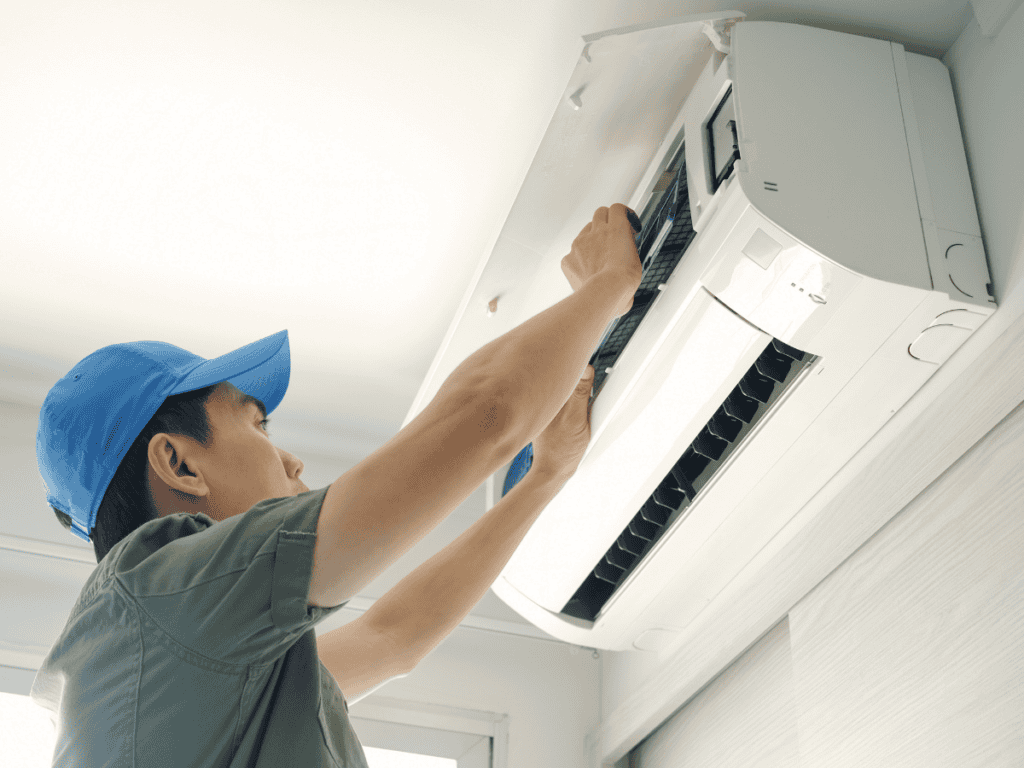
Get Your Comfort Back Today
A thermostat that is not working does not have to mean a miserable day in a too-hot or too-cold house. Often it is a quick fix, and when it is not, we are here. At Advantage Air Services, we bring fast, reliable service and honest, flat-rate pricing to homes across Raleigh, Cary, Garner, Apex, Holly Springs, Fuquay-Varina, Clayton, and the rest of Wake and Johnston Counties.
Ready for help? Call or text us at (919) 639-2661 to schedule your service. Ask about $25 off any service repair, plus our senior and military discounts, and let us get your heating and cooling back under control.
Frequently Asked Questions
Why Is My Thermostat Not Working?
A thermostat usually stops working because of dead batteries, power loss, incorrect settings, loose wiring, or a failed thermostat. Checking these common issues first can often restore your heating or cooling system without major repairs.
Why Is My Thermostat Screen Blank?
A blank thermostat screen usually indicates a power problem. Replace the batteries, check the circuit breaker, and confirm the furnace or air handler has power. If the display remains blank, professional diagnosis may be needed.
Can a Thermostat Stop Working Without Warning?
Yes. Thermostats can fail suddenly because of electrical issues, worn components, dead batteries, or internal sensor failures. Older thermostats are generally more likely to develop unexpected problems.
Should I Repair or Replace My Thermostat?
Repairing a thermostat makes sense for minor wiring or power issues, while older or unreliable thermostats are often better replaced. A compatible programmable or smart thermostat can also improve comfort and energy efficiency.
When Should I Call an HVAC Technician for a Thermostat Problem?
Call an HVAC technician if your thermostat remains unresponsive after basic troubleshooting or your heating and cooling system still will not operate. Professional testing can identify wiring problems, equipment faults, or thermostat failures safely.